Reviewed by a licensed speech-language pathologist
Quick answer: You can help a child with a speech delay at home by talking through daily routines, reading together, naming what you both see, giving the child time to respond, and following their lead in play. These habits build language every day and work best alongside a professional evaluation and any recommended therapy.
When a child is slow to start talking, most parents feel a pull to do something, anything, to help. The good news is that some of the most useful support does not need special equipment or a clinic appointment. It happens in the small moments of an ordinary day. Knowing how to help a child with speech delay at home starts with understanding that children learn language from the talk that surrounds them, so more meaningful back-and-forth gives a child more chances to grow.
What causes a speech delay, and does the cause change what I do at home?
A speech delay can have many roots. Some children are simply late talkers who catch up, a pattern the American Speech-Language-Hearing Association describes as late language emergence. Others have hearing differences, a speech sound difficulty, or a broader developmental condition. The National Institute on Deafness and Other Communication Disorders points out that a hearing check is an important early step, because even mild hearing loss can slow speech.
The reassuring part is that the core home strategies are much the same across causes. Rich, responsive talk helps nearly every child. A professional evaluation tells you whether more targeted help is needed, but it does not stop you from starting the everyday habits now.
How do I build more language into daily routines?
The single most powerful tool is your own running commentary. Narrate what you are doing as you do it: “I’m pouring the milk, now we stir.” This is sometimes called self-talk and parallel talk, and it floods the child’s day with words tied to real actions and objects.
A few habits make a big difference:
- Name things often, and keep the words short and clear.
- Pause after you speak, then wait. Counting to five in your head gives the child room to take a turn.
- Expand on whatever the child offers. If they say “dog,” you say “big dog, the dog is running.”
- Get face to face and down at their level so they can see your mouth and eyes.
- Follow their interest. Talk about the toy they picked, not the one you wish they had.
None of this needs a set lesson time. Bath time, meals, and the walk to the car all work.
Does reading together really help?
Yes, and it helps even before a child can talk back. The American Academy of Pediatrics encourages reading and shared book time as a way to grow vocabulary and back-and-forth attention. For a child with a delay, you do not need to read every word on the page. Point to pictures, name them, ask simple questions, and let the child turn the pages. Books with repeated lines invite the child to fill in a word once they know the pattern.
Short and frequent beats long and rare. A few minutes several times a day is easier for a young child to enjoy than one long session.
How can play be used to encourage talking?
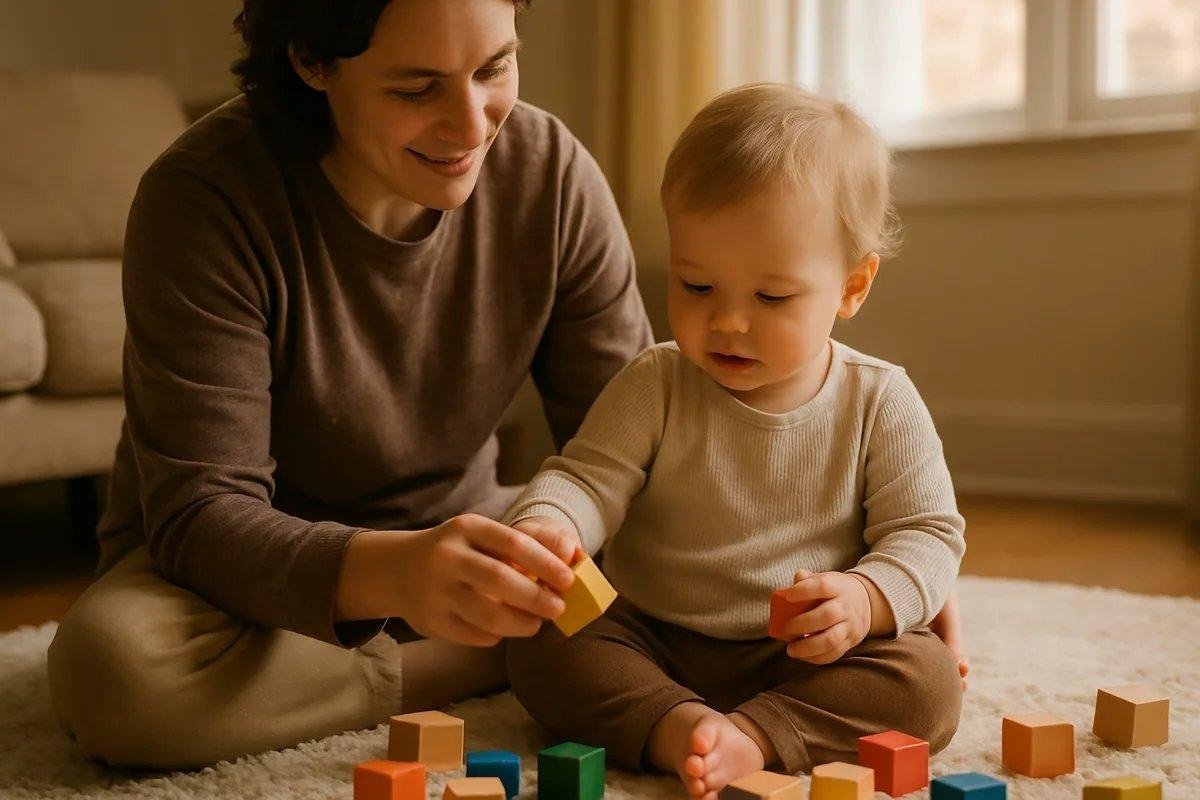
Play is where children practice language without pressure. Pretend play with dolls, toy food, or cars gives natural reasons to talk. Sabotage games, where you hand a child a closed container or a crayon with no paper, gently invite a request. You can also offer choices out loud: “Do you want the ball or the block?” This gives the child a word to reach for.
The Centers for Disease Control and Prevention shares developmental milestones that can help you match activities to where a child is, so you can aim just slightly above their current level rather than far beyond it.
Between a first evaluation and regular therapy there is often a wait, and even weekly sessions are a small part of a child’s week. Some families add short, playful speaking practice at home to keep the momentum going. Voice-first tools such as an at-home option worth a look give a child low-pressure daily practice through play, which can support the work a speech-language pathologist does. Home practice is a supplement to therapy, not a substitute for it, and it should stay fun rather than becoming a chore.
What should I avoid doing?
A few common habits quietly work against language growth. Try not to quiz the child constantly with “say this” or “what’s that,” which can turn talking into a test. Avoid finishing every sentence for them or jumping in before they have a chance to try. Keep passive screen time low, since a child learns far more from talking with a live person than from watching alone. And resist the urge to correct every error out loud. Modeling the right word warmly does the same job without the sting.
When should I seek professional help too?
Home support and professional support are not either-or. If a child is well behind the milestone ranges, is losing words they once had, or is getting frustrated by not being understood, an evaluation is worth pursuing. Parents can request one directly through early intervention for children under three or through the school system for older children. Acting early carries little downside, and it does not mean stopping the home habits that help every day.
Key takeaways
- Everyday talk during routines is one of the strongest ways to help a child with a speech delay at home.
- Read often, follow the child’s lead in play, and pause to give them a turn to respond.
- Model correct words instead of correcting errors, and keep talking positive and pressure-free.
- Limit passive screen time and favor live, back-and-forth conversation.
- Home strategies work alongside, not instead of, an evaluation and any recommended therapy.
Frequently asked questions
How much talking at home actually helps a child with a speech delay?
A lot. Children learn language from the talk around them, so more conversation, naming, and waiting for a response all add practice. Home time dwarfs therapy time, so what happens at home matters.
Should I correct my child’s mistakes when they speak?
It is usually better to model the correct version. If a child says “wa-wa,” reply with “water, here is your water” rather than asking them to repeat it. This keeps talking positive.
Is screen time bad for a child with a speech delay?
Passive watching does not build language the way conversation does. Interactive activities where a child speaks and gets a response are more useful than watching alone.
Can I help at home without a diagnosis yet?
Yes. Narrating, reading, and playing are safe and useful whether or not an evaluation has happened, so you can start today while you pursue one.
How long before I see progress?
It varies by child and cause. Some late talkers gain quickly, others need steady support over months. Consistency usually matters more than any single activity.
Sources
- American Speech-Language-Hearing Association: Late Language Emergence (asha.org)
- American Speech-Language-Hearing Association: Speech and Language Developmental Milestones (asha.org)
- American Academy of Pediatrics (HealthyChildren.org): Language Delay and Toddler Development (healthychildren.org)
- Centers for Disease Control and Prevention: Developmental Milestones (cdc.gov)
- National Institute on Deafness and Other Communication Disorders: Speech and Language (nidcd.nih.gov)